~/projects/cpts-notes-pipeline
CPTS study notes pipeline
A Claude Code, Claude Haiku, and Obsidian workflow that turns pasted CPTS study material into structured notes, checklists, and review artifacts, with human review.
A workflow for studying toward the Certified Penetration Testing Specialist (CPTS). It uses Claude Code and Claude Haiku to turn pasted study material into structured, Obsidian-ready notes: checklists, review artifacts, and organized references that slot into an existing vault.
To be clear about status: this is a study workflow. I am preparing for the CPTS, not claiming to hold it.
Problem
CPTS preparation generates a large volume of material across many topics: enumeration, exploitation, privilege escalation, pivoting, and reporting. Studying it by hand ran into three recurring problems:
- Volume. There is far more material than fits in working memory, and re-reading it linearly is a poor way to retain it.
- Consistency. Notes taken ad hoc drift in structure over time, which makes them hard to review and cross-reference later.
- Review workflow. Without deliberate review artifacts (checklists, spaced prompts), notes get written once and never revisited, which defeats the point.
Approach
The pipeline standardizes how raw material becomes durable notes:
- Claude Code orchestrates the workflow and file handling.
- Claude Haiku does the fast, high-volume reformatting into consistent structures.
- Obsidian is the destination vault, so notes are linkable and searchable.
- Structured formatting turns prose into topic summaries, command and technique checklists, and spaced-review prompts, all following the same shape.
- Human review is the final gate: I check accuracy before anything enters the vault.
Workflow
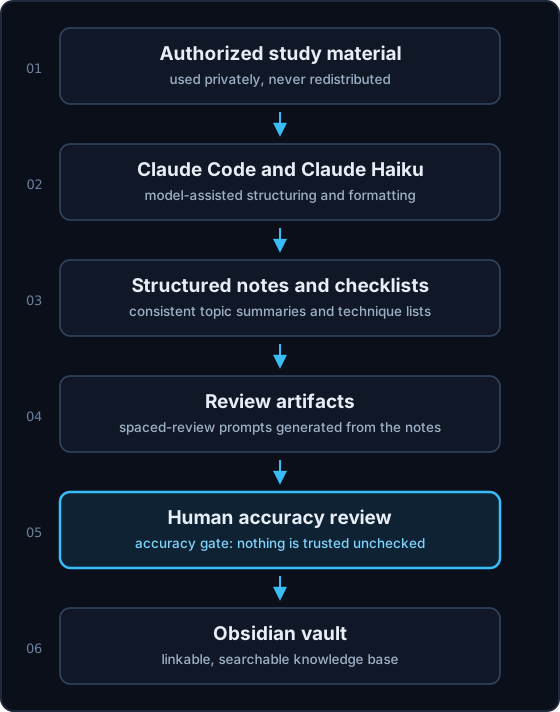
The steps in order: authorized study material, then Claude Code and Claude Haiku processing, then structured notes and checklists, then review artifacts, then a human accuracy review, and finally the Obsidian vault. The human review is the gate: nothing is trusted without it.
Security considerations
- No secrets. Credentials, tokens, and lab-specific details are never pasted in or written into notes.
- No private credentials or infrastructure. Nothing tying back to real accounts or environments goes through the pipeline.
- No copyrighted redistribution. Course content is used privately for study and is not reproduced or published; none of it appears on this site.
- Human review required. Generated notes are a starting point, not an authority. The model speeds up structuring; it does not get the final say on correctness.
Lessons learned
- Prompt design matters more than model choice. A precise, consistent prompt produces notes that are actually reusable; a vague one produces tidy-looking but shallow output.
- Consistency compounds. Once every note follows the same structure, review and cross-linking get much easier, which is where the real retention gain comes from.
- Automation assists, it does not replace understanding. The value is in reviewing and internalizing the structured notes, not in generating them.
Future improvements
- Better templates for each topic area so structure is even more predictable.
- Review scheduling to surface notes on a spaced cadence rather than on demand.
- Reference linking that automatically connects related notes and techniques.
- Workflow refinements to reduce the manual steps between paste and vault while keeping the human accuracy check in place.