~/projects/derekwei-xyz
derekwei.xyz (this site)
This site: a fast, static Astro 5 build with a strict CSP, no cookies or trackers, and no third-party requests, deployed on Cloudflare Pages.
The site you’re reading right now. It’s my portfolio, but I also treated it as a small exercise in doing the boring security work properly on something I actually ship.
Problem
A cybersecurity portfolio has a higher bar than most personal sites: it should demonstrate the security fundamentals it talks about. That means fast, accessible, recruiter-friendly, and hardened, without dragging in a backend, database, or third-party scripts that widen the attack surface in version 1.
Approach
- Astro 5 with fully static output; pages are plain HTML with scripts only where a page genuinely needs them.
- TypeScript in strict mode, including the inline scripts Astro compiles and bundles.
- Tailwind CSS 4 with a small set of design tokens for the dark blueprint palette.
- Markdown/MDX content collections for projects, writeups, and lab notes, validated against Zod schemas at build time.
- GitHub-based deployment to Cloudflare Pages: a push builds the site and publishes the static output to Cloudflare’s edge. The repository is kept private while the site is actively maintained.
Architecture
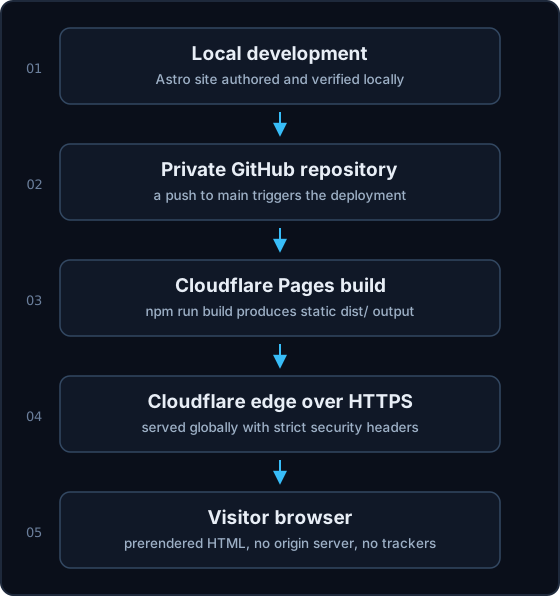
The flow in order: local development, then a push to the private GitHub repository, then a Cloudflare Pages build, then the Cloudflare edge over HTTPS, then the visitor’s browser. There is no origin server and no backend at request time.
Security considerations
A static portfolio doesn’t have much attack surface, which is exactly why it should get the fundamentals right:
- Strict Content Security Policy with no inline scripts; everything Astro emits is bundled to external files.
- Security headers shipped via Cloudflare Pages’
_headersfile. - No cookies, no trackers, no analytics, no third-party requests of any kind.
- System font stack only: no font CDN, no external stylesheets.
The full breakdown (headers, CSP directives, and the reasoning behind them) is on the architecture page.
Lessons learned
- A strict CSP forces good habits: no inline scripts or styles meant restructuring a few
components, but the result is a policy that actually holds instead of one padded with
unsafe-inline. - Keeping every fact in one place (a single constants module) stopped the resume, homepage, and achievements page from drifting out of sync.
- Static-first removes whole categories of problems. There is no server to patch and no database to leak.
Future improvements
- Publish sanitized CTF writeups and lab notes on a regular cadence.
- Add a lightweight, privacy-respecting way to measure interest without cookies or third-party trackers.
- Revisit whether any interactive feature genuinely needs a backend before adding one, so the security model only grows when there is a real reason.